The John Crawford Process
Drawing upon that international experience, between 2018-2023 he worked closely with a victim of the conflict (Paul Crawford – whose father was murder by the Ulster Volunteer Force [UVF] in 1974) and a senior interlocutor to the UVF researching and documenting a process wherein Paul sought the truth about the murder from the UVF and an acknowledgement of responsibility – which had never been admitted. This complex and sensitive process was ultimately successful. It resulted in the UVF providing the family with the detailed information they desired and acknowledging their responsibility for the murder. McEvoy’s report on this process was published in 2023.
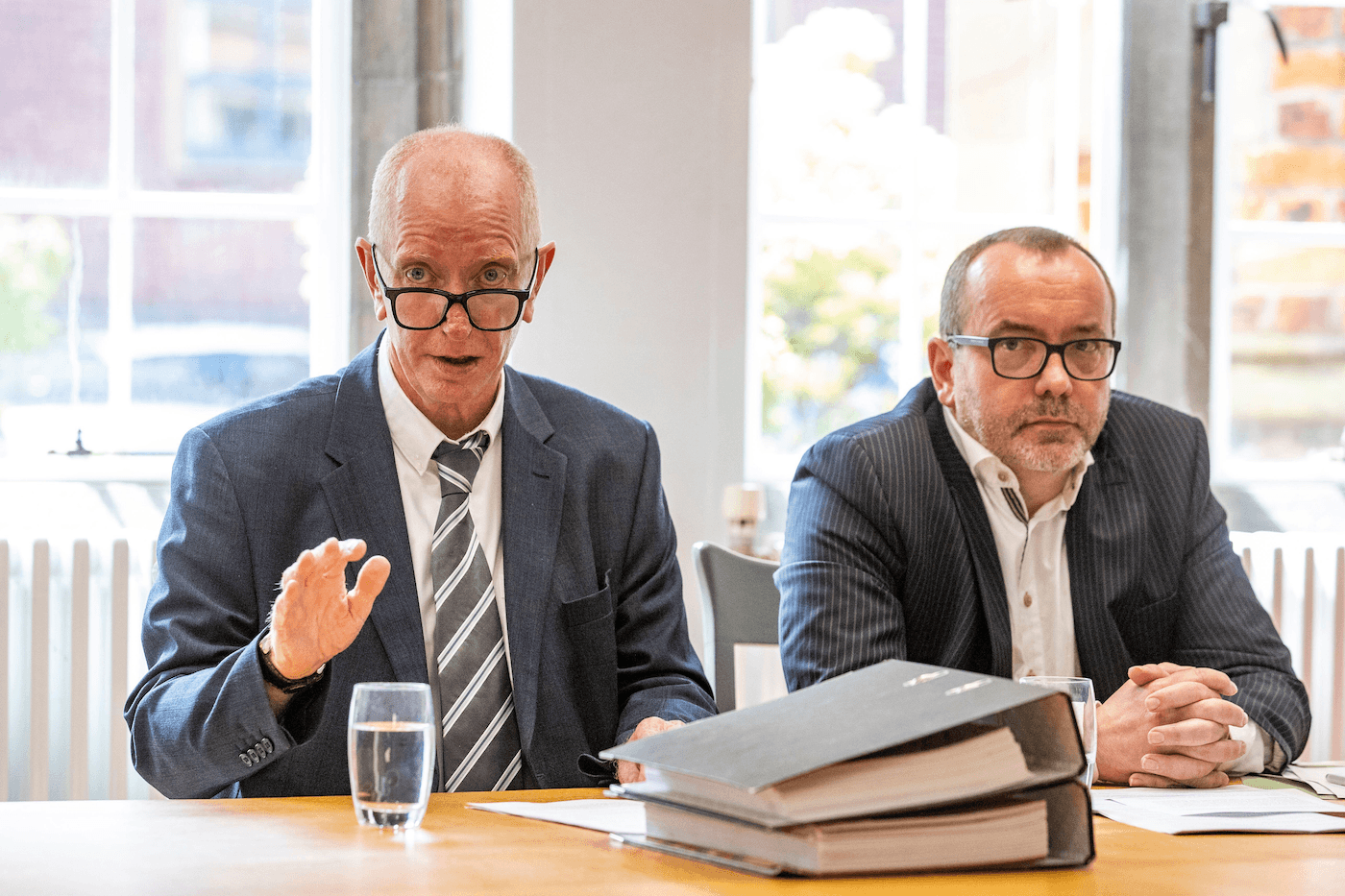
Press Conference Launching ‘The Killing of John Crawford’. 16th May 2023 Left to right Paul Crawford (John’s son), Professor Kieran McEvoy. The report documents the successful process securing information and acknowledgement from the UVF, who murdered John in 1974.
Replacing the Boris Johnson Legacy
Act with Legislation Which Can
Secure Information Retrieval and
Acknowledgement
In 2022, the Boris Johnson led government introduced the Northern Ireland Troubles (Legacy and Reconciliation) Act which entered into effect in 2024. This highly controversial legislation was aimed primarily at securing an amnesty for British army veteran, based on the false claim that ex-soldiers were the ‘victims of witch-hunt’ by NI based police, prosecutors, lawyers and judges. In January 2023 Professor McEvoy secured the first public commitment from then Labour Leader Sir Keir Starmer MP that Labour would repeal and replace the Johnson Legacy Act if elected. This amnesty was found to be unlawful in 2024. In 2025 the UK and Ireland concluded a new Framework Agreement on addressing the past in NI and a new Legacy Bill was introduced in Westminster in 2025, with analogous legislation introduced in the Dáil in 2026.
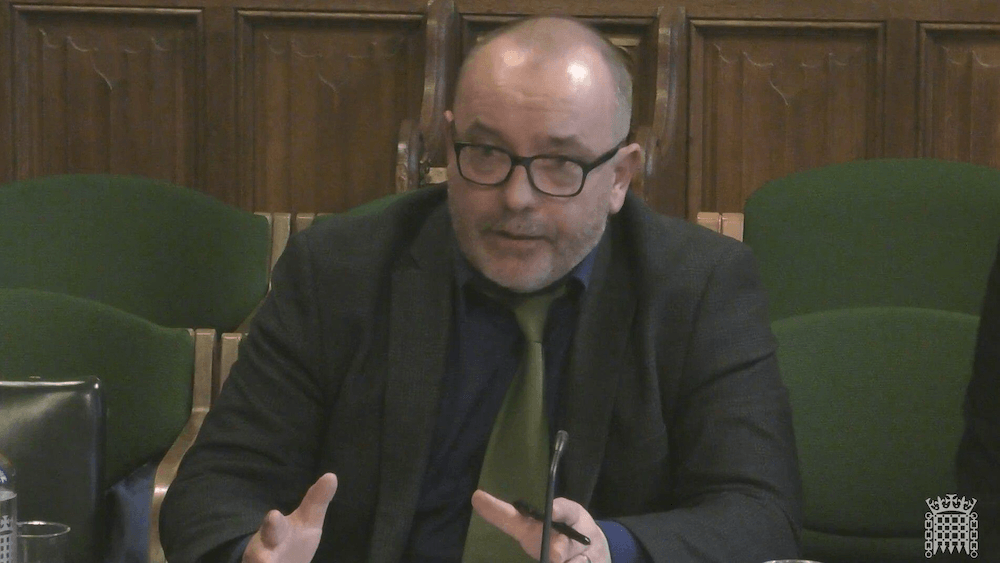
Professor Kieran McEvoy giving evidence to Westminster Joint Committee on Human Rights on new legacy bill, 28th January 2026.
Professor McEvoy has worked extensively to demonstrate that voluntary information recovery and acknowledgement by armed groups and state actors must be part of the efforts to address the legacy of the conflict – alongside independent investigative processes. Such a parallel process was previously agreed to in the Stormont House Agreement in 2014 but abandoned by the Boris Johnson government. He has produced a report on the topic, given evidence to parliamentary committees on the issue (see Policy 2, 5 and 7), and organised a major conference on the topic.
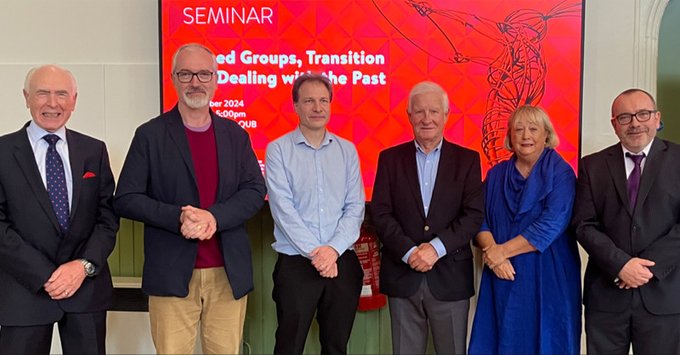
Conference on Armed Groups, Transition and Dealing with the Past:
Queens University Belfast October 2024
Pictured L-R: Professor Geoff Knupfer (formerly Independent Commission for Location of Victims’ Remains), Professor Richard English (Institute for Global Peace, Security and Justice, Queen’s University Belfast), Daniel Holder (Director Committee on the Administration of Justice), Professor Chris Maccabe (Formerly NIO and Witness to ETA Decommissioning Process), Professor Monica McWilliams (ster University), and Professor Kieran McEvoy (Queen’s University Belfast).
Countering Denialism in the Post
Truth Era
In addition to exploring the ways in which armed groups and others can positively address past harms through apologies, information recovery or other forms of acknowledgement, Professor McEvoy has also been examining how those involved in transitional justice can better counter continued denialism, revisionism and other efforts to obscure the reality of past human rights violations – particularly in the post truth era. In 2026 he published an academic article on this subject with regard to Northern Ireland as well as a research report for the United Nations Special Rapporteur on Transitional Justice on how this can be done internationally.